Latex Allergy and Condom Alternatives: What to Choose Instead
If latex condoms cause itching, irritation, or discomfort, you don’t have to stop using condoms.
👉 You just need to switch to the right material
The best alternatives are:
- Polyisoprene condoms
- Polyurethane condoms
Both are latex-free and still provide protection against pregnancy and most STIs when used correctly.
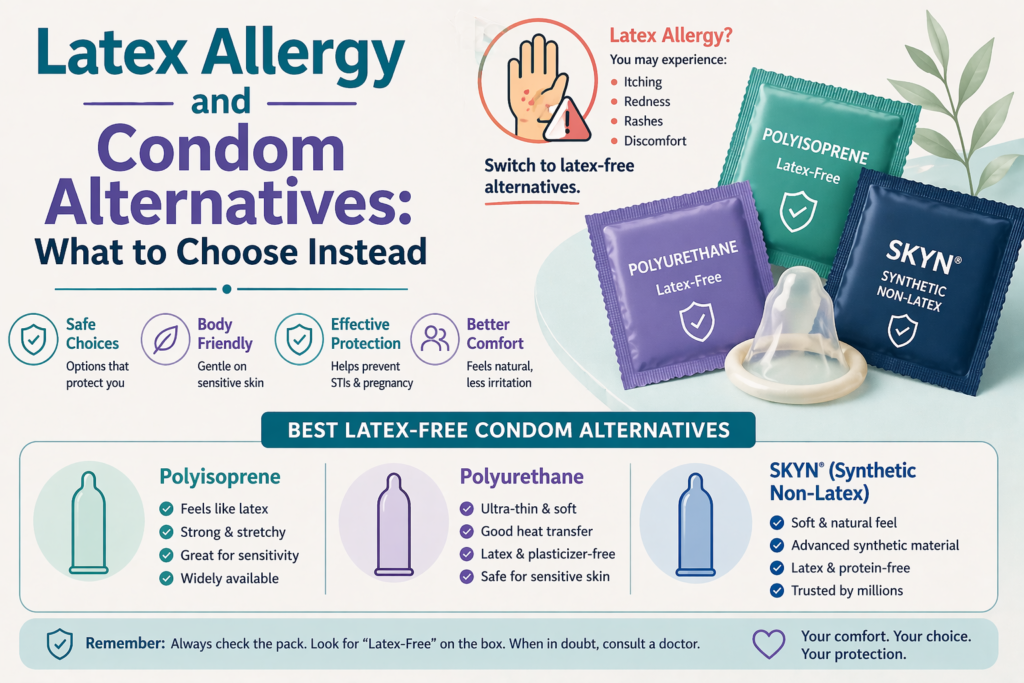
If you think you have a latex allergy:
👉 Switch to non-latex condoms
👉 Choose polyisoprene or polyurethane
Avoid:
- continuing latex use if symptoms appear
- using lambskin if STI protection matters
What a Latex Allergy Can Feel Like
Latex reactions can range from mild to serious.
Common symptoms
- itching
- redness
- swelling
- rash or irritation
- hives
Less common but serious symptoms
- sneezing
- runny nose
- wheezing
- breathing difficulty
👉 If breathing symptoms occur, seek medical help immediately.
Allergy or Just Irritation?
Not every reaction is a latex allergy.
Sometimes symptoms come from:
- lubricant ingredients
- spermicide
- friction
- poor fit
👉 If symptoms repeat, don’t guess — switch materials and observe.
How Common Is Latex Allergy?
Latex sensitivity is not rare.
Studies show that many people report:
- itching
- swelling
- discomfort during condom use
And importantly:
👉 Repeated exposure can make reactions worse over time
Best Condom Alternatives for Latex Allergy
1. Polyisoprene Condoms (Best Overall)
Polyisoprene is a synthetic rubber that does not contain latex proteins.
Why choose it
- soft and stretchy
- closest feel to latex
- good comfort and fit
- safe for STI and pregnancy protection
👉 Best choice for most people with latex allergy
2. Polyurethane Condoms (Thin Option)
Polyurethane condoms are made from a thin plastic material.
Why choose it
- thinner feel
- better heat transfer
- latex-free protection
Watch out
- less stretchy than latex
- may slip if size is wrong
👉 Best for people who prefer thinner condoms
3. Lambskin Condoms (Limited Use)
Lambskin condoms are made from natural membrane.
Important limitation
👉 They do NOT protect against STIs
Why
- microscopic pores allow viruses to pass
👉 Only for pregnancy prevention — not STI protection
4. Internal Condoms (Alternative Option)
Internal condoms are another latex-free barrier method.
👉 Useful if:
- you want a different experience
- you need a non-latex option
Quick Comparison
| Type | Latex-Free | STI Protection | Feel | Best For |
|---|---|---|---|---|
| Polyisoprene | Yes | Yes | Soft, stretchy | Best overall |
| Polyurethane | Yes | Yes | Thin | Sensitivity |
| Lambskin | Yes | No | Natural | Pregnancy only |
| Internal | Yes | Yes | Different | Alternative method |
How to Choose the Right Option
Choose polyisoprene if:
- you want a latex-like feel
- you want comfort + flexibility
Choose polyurethane if:
- you prefer thinner condoms
- you want better heat sensation
Avoid lambskin if:
- STI protection is important
Common Mistakes to Avoid
- continuing latex use despite reactions
- assuming all non-latex condoms are the same
- choosing lambskin without understanding STI risk
- ignoring repeated irritation
- blaming condom size when it’s actually material
Myth vs Fact
Myth: Latex allergy means no condoms
Fact: Non-latex options are widely available
Myth: All non-latex condoms are the same
Fact: Materials differ in feel and protection
Myth: Lambskin is the best option
Fact: It does not protect against STIs
Myth: All irritation is latex allergy
Fact: Lubricants and friction can also cause issues
Simple Rule to Remember
👉 Latex problem → switch material
👉 STI protection needed → polyisoprene or polyurethane
👉 Never rely on lambskin for STI protection
FAQ
1. What condoms should I use if I’m allergic to latex?
Polyisoprene and polyurethane are the best options.
2. Are polyisoprene condoms truly latex-free?
Yes, they are made without latex proteins.
3. Which is better: polyurethane or polyisoprene?
Polyisoprene feels more like latex; polyurethane is thinner.
4. Can I use lambskin condoms safely?
Only for pregnancy prevention — not for STI protection.
5. How do I know if it’s latex allergy?
Look for itching, swelling, rash, or breathing symptoms after use.
6. Can lubricant cause similar symptoms?
Yes. Some lubricants and spermicides can irritate skin.
7. Should I see a doctor?
Yes, if symptoms repeat or become severe.
8. Are non-latex condoms less effective?
No. When used correctly, they are effective for protection.
Final Takeaway
A latex allergy doesn’t mean you have to compromise on protection.
👉 Switch to polyisoprene or polyurethane
👉 Avoid latex if symptoms appear
👉 Never use lambskin for STI protection
Choosing the right material can completely solve discomfort and help you stay safe with confidence.
Medical Disclaimer
This article is for educational purposes only and does not replace professional medical advice. If you experience repeated reactions or severe symptoms, consult a qualified healthcare professional.