Can You Use a Condom in the Shower?
Yes, You Can Use a Condom in the Shower but the real problem is not the water.
The bigger issue is that shower sex can make condoms more likely to slip, move out of place, or experience more friction if there is not enough suitable lubrication. Soap, shower gel, oils, and other bathroom products can also create problems depending on the condom material.
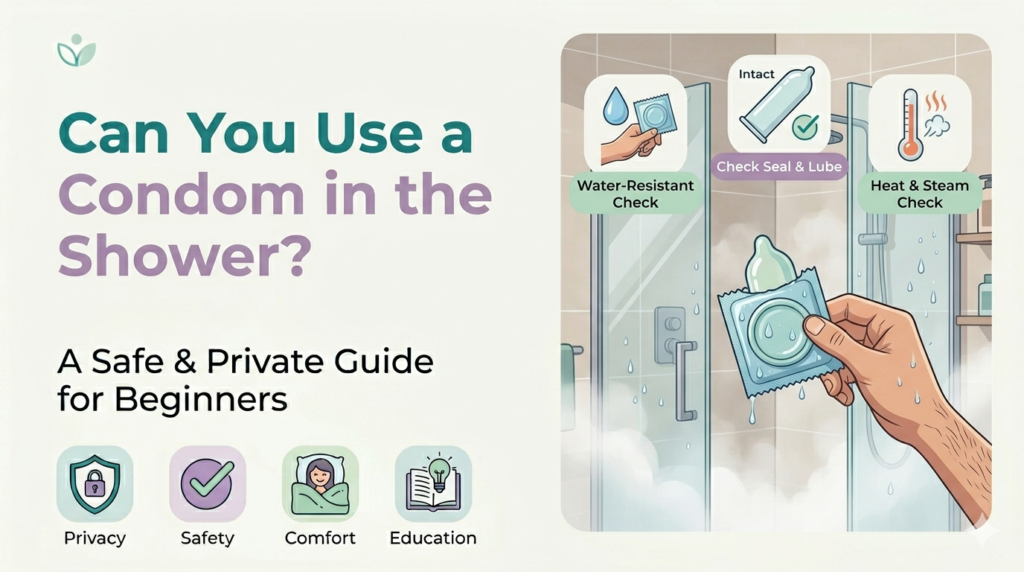
For most people, the question is not “Can a condom be worn in water?” but “Can it still be used well in the shower?” That depends on fit, lubrication, and avoiding products that can weaken or irritate.
Does water damage a condom?
Plain water is not usually the main concern. A condom does not suddenly stop working just because you are in the shower. What matters more is everything around that situation: wet hands, movement, slippery surfaces, less control, and the temptation to use whatever product is nearby as lubricant.
The most important product-related issue is lubricant compatibility. Official guidance consistently warns that oil-based products can weaken latex condoms, while water-based or silicone-based lubricants are safer choices depending on the condom type.
Why condom use in the shower can be trickier
Slipping risk
Shower sex can be physically slippery, and that can affect how securely a condom stays in place. Water on the body, shifting positions, and reduced grip can increase the chance of the condom moving or slipping, especially if the fit is already not ideal. CDC guidance also stresses holding the condom at the base during withdrawal to help prevent it from slipping off.
If a condom regularly bunches up, rolls unevenly, or feels loose, the shower may exaggerate that problem rather than cause it.
Less natural lubrication
A common misunderstanding is that shower water acts like lubricant. It does not. Water washes away natural lubrication, and that can increase friction. Higher friction can make sex less comfortable and may increase the chance of condom movement or breakage if the situation becomes dry. Public health and clinical guidance recommend adequate lubrication with condoms for exactly this reason.
Soap and body products
Soap, shampoo, body wash, lotion, petroleum jelly, massage oil, or similar products are not good substitutes for lubricant. Oil-based products can damage latex condoms, and fragranced wash products may also irritate sensitive skin. NHS and CDC guidance both warn against oil-based products with latex condoms.
Positioning and friction
Shower sex often involves awkward angles and less stable footing. That can lead to more pulling, rubbing, or repositioning, all of which can affect comfort and condom performance. This does not mean condoms should not be used in the shower. It means a careful, slower approach usually works better than assuming the environment is forgiving.
Which lubricant should you use in the shower with a condom?
If you are using a latex condom, avoid oil-based products. Established guidance says latex condoms should be used with water-based or silicone-based lubricants, while oil-based products can weaken the material and increase breakage risk.
For shower use specifically, many people find silicone-based lubricant more practical because it tends to last longer around water than water-based lubricant. That said, the key point is still condom compatibility: do not assume that a random bathroom or skincare product is safe to use with condoms. Planned Parenthood and Cleveland Clinic both support water-based or silicone lubricants for condom use, and both warn against oil-based products with latex.
What to avoid when using a condom in the shower
Avoid these common mistakes:
- Using soap, shampoo, shower gel, lotion, coconut oil, petroleum jelly, or massage oil as lubricant. These are not reliable substitutes, and oil-based products can damage latex condoms.
- Assuming water is enough lubrication. It is not. Water can reduce natural lubrication instead of replacing it.
- Putting on the condom with very wet hands if that makes it harder to unroll properly.
- Using a condom that already feels too loose or too tight outside the shower. Poor fit usually gets worse, not better, in a slippery environment.
- Ignoring expiry, storage, or visible damage. Condoms should be stored in a cool, dry place and used once only.
How to use a condom more safely in the shower
- Choose the right fit first. A condom that fits properly is less likely to slip or bunch.
- Put it on before things get too slippery. This gives you better control and helps ensure it rolls down fully.
- Use a compatible lubricant. For latex, use water-based or silicone-based lubricant, not oil-based products.
- Check that it stays in place. If it starts rolling up, shifting, or feeling loose, stop and replace it.
- Hold the base during withdrawal. This helps reduce slipping after ejaculation.
- Use a new condom every time. Never reuse one.
Are condoms still effective in the shower for pregnancy and STI protection?
A condom can still help reduce the risk of pregnancy and sexually transmitted infections in the shower, but only if it is used correctly and stays intact throughout use. Latex condoms are a recognized barrier method, but their reliability depends on proper use, suitable lubrication, and avoiding damage to the material.
If a condom slips off, breaks, tears, or is exposed to an incompatible product, its protective value may be reduced. If that happens, consider appropriate next steps such as emergency contraception or STI testing depending on the situation, and speak with a qualified healthcare professional or sexual health clinic for personal advice. This is especially important if there was unprotected exposure or concern about irritation, allergy, or condom failure.
When shower sex may not be the best idea
Shower sex may be less suitable if:
- condoms often feel loose or uncomfortable for you
- you are already dealing with dryness or irritation
- you tend to rely on improvised products instead of proper lubricant
- you are new to condoms and still learning fit and technique
- the surface feels unsafe or unstable
For beginners, it is often easier to get condom use right in a more controlled setting first. Confidence with fit, application, and lubricant choice matters more than the location.
Myth vs fact
| Myth | Fact |
|---|---|
| Water works like lubricant. | Water does not replace lubricant and may wash away natural moisture. |
| A condom cannot be used in the shower at all. | It can be used in the shower, but slipping, friction, and wrong products can create extra challenges. |
| Soap or shampoo is fine in an emergency. | These are not good lubricant substitutes, and oil-based products can damage latex condoms. |
| If the condom stays on, fit does not matter. | Fit still matters because loose or tight condoms are more likely to feel uncomfortable or perform poorly. |
Final takeaway
Yes, you can use a condom in the shower. The main issue is not the water itself. The real risks are reduced lubrication, slipping, awkward movement, and using the wrong products. A well-fitting condom plus a compatible lubricant gives you a safer, more comfortable setup than relying on shower water or bathroom products.
For many readers, the smartest takeaway is simple: if you plan to use a condom in the shower, think about fit and lubricant before you think about the setting.
FAQ Section
1. Can shower water make a condom break?
Not usually by itself. The bigger concerns are friction, slipping, and using incompatible products such as oil-based substances with latex condoms.
2. Can I use soap or body wash instead of lube with a condom?
No. Soap and body products are not suitable lubricants, and oil-based products can weaken latex condoms. They may also irritate sensitive skin.
3. What is the best lubricant for using a condom in the shower?
A condom-compatible lubricant is best. For latex condoms, water-based or silicone-based lubricants are the safer options, and silicone-based lubricant may last better around water.
4. Are condoms less effective in the shower?
They can still be effective, but shower conditions may make correct use harder. Slipping, dryness, and poor fit can reduce reliability if not managed properly.
5. Can a condom slip off more easily in the shower?
Yes, it can. A slippery environment and poor fit may increase the chance of movement or slipping. Holding the base during withdrawal also matters.
6. Can I use coconut oil with a latex condom in the shower?
No. Oil-based products, including coconut oil, can damage latex condoms.
7. Is shower sex safer because everything is being washed away?
No. Running water does not replace barrier protection or proper lubrication, and it does not remove pregnancy or STI risk. Condoms still need to be used correctly.