Can You Take Condoms on a Plane?
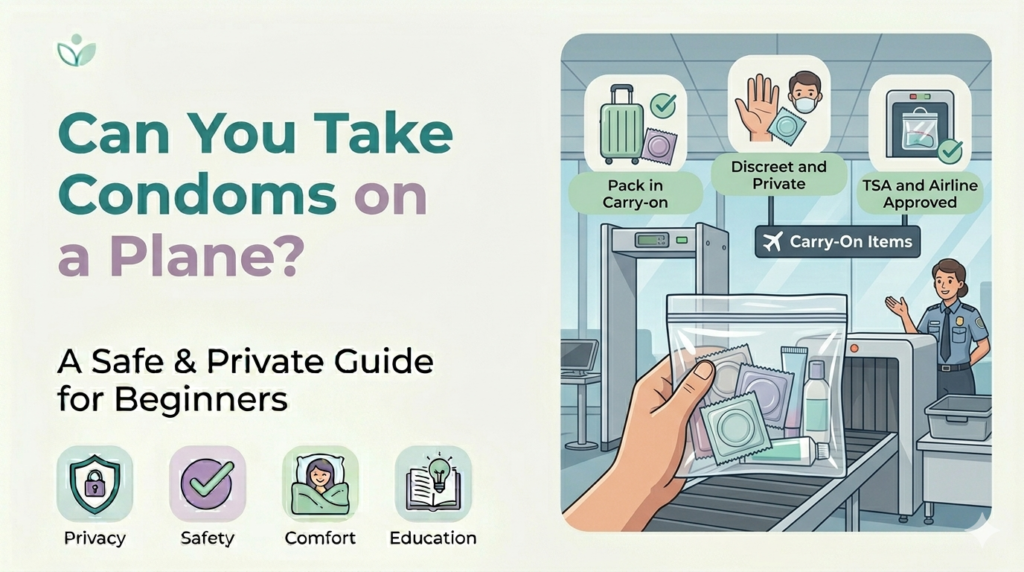
Yes, condoms are generally allowed on planes.
For most travelers, condoms can go in:
- carry-on baggage
- checked luggage
They are not normally treated as a restricted airport-security item. So the real travel question is not whether they are allowed — it is how to carry them without damaging them.
Can Condoms Go in Carry-On Baggage?
Yes, condoms can be packed in carry-on baggage.
For many travelers, this is actually the better option because:
- you have more control over storage
- they are less likely to get crushed
- they are easier to keep away from sharp objects
- they are easier to access if needed
Carry-on is often the practical choice when you want to protect the wrapper and avoid unnecessary damage during travel.
Can Condoms Go in Checked Luggage?
Yes, condoms can also go in checked luggage.
There is generally no issue with packing them there. But checked baggage is often handled more roughly, which means condoms may be:
- pressed under heavy items
- tossed around during transit
- stored next to sharp-edged objects
So while checked baggage is allowed, it is often smarter to keep at least some condoms in your carry-on and pack them carefully.
Will Airport Security Stop You for Carrying Condoms?
In ordinary travel situations, no.
Condoms are usually just another personal item in your bag. Airport screening is focused on prohibited or restricted items, not standard barrier protection. The more likely issue during security is not condoms themselves — it is other products packed with them, especially:
- lubricants
- gels
- creams
- aerosols
That is where liquid rules become important.
How to Pack Condoms Safely for a Flight
Keep them in the original wrapper
The original foil wrapper helps protect condoms from:
- friction
- dirt
- moisture
- accidental damage
It also makes it easier to check the expiry date and packet condition before use.
Avoid crushing and sharp objects
Do not throw condoms loose into a cluttered bag.
Avoid packing them:
- next to razors
- under heavy chargers
- beside metal tools
- in tightly packed side pockets
A small pouch or separate compartment is a much better option.
Protect them from heat and long-term poor storage
Travel itself is not usually the problem. Poor storage is.
Condoms can be damaged by:
- prolonged heat
- direct sunlight
- moisture
- friction
- long periods in pockets or parked cars
That is why a travel day can be risky if condoms are carried carelessly.
Check expiry before you travel
Before your trip, quickly check:
- expiry date
- packet seal
- visible damage
- texture or condition if already opened
Do not travel with condoms that are:
- expired
- torn
- dry
- stiff
- sticky
- visibly damaged
What About Lubricant on a Plane?
This is where many travelers get confused.
The condoms themselves are usually not the issue. Lubricant may be, depending on how you pack it.
If you carry lube in cabin baggage:
- it usually needs to follow liquid and gel rules
- smaller containers are easier for carry-on
- larger bottles are usually better in checked luggage
So the practical rule is:
- condoms: usually fine in carry-on or checked baggage
- lube in carry-on: follow liquid rules
- larger lube bottles: better in checked baggage, packed securely
Common Travel Mistakes to Avoid
1. Keeping condoms loose in a wallet or pocket for too long
Travel often involves heat, friction, and pressure — exactly the conditions you want to avoid.
2. Packing them next to sharp or crushing items
Even if condoms are allowed on the plane, damaged wrappers are still a problem.
3. Forgetting that lubricant may trigger liquid-rule issues
A large bottle of lube in your cabin bag is much more likely to cause trouble than the condoms themselves.
4. Assuming any old condom is still fine
Always check expiry date and packet condition before use.
Myth vs Fact
Myth: You cannot take condoms through airport security
Fact: Condoms are generally allowed and are not usually treated as prohibited items.
Myth: Condoms must only go in checked baggage
Fact: They can go in both carry-on and checked luggage.
Myth: Airport screening treats condoms like liquids
Fact: Condoms themselves are not the liquid-rule problem. Lubricant is more likely to be affected.
Myth: Travel does not affect condom quality
Fact: Heat, moisture, friction, sharp objects, and poor storage can still damage condoms during travel.
Best Travel Advice for Condoms
If you want the safest and simplest approach:
- keep condoms in their original wrapper
- place them in a small pouch or protected compartment
- avoid heat, pressure, and sharp items
- check expiry before travel
- keep at least some in carry-on baggage
- follow liquid rules if carrying lubricant
That is the easiest way to travel with condoms safely and confidently.
FAQ
1. Can you carry condoms in hand luggage?
Yes. Condoms are generally allowed in hand luggage.
2. Can you put condoms in checked baggage?
Yes. They can also go in checked baggage, though carry-on is often more practical for storage control.
3. Will airport security ask about condoms in your bag?
Usually no. In normal travel situations, condoms are not a special security issue.
4. Can condoms get damaged while traveling?
Yes. Heat, moisture, friction, sharp objects, and crushing can damage them.
5. Can you take lubricant on a plane with condoms?
Yes, but lubricant in carry-on baggage may need to follow liquid rules.
6. Should condoms stay in their wrapper while traveling?
Yes. Keeping them in their original wrapper helps protect them and makes expiry checks easier.
7. Is carry-on or checked luggage better for condoms?
Both are allowed, but carry-on is often the better practical choice because you have more control over storage conditions.
Final Takeaway
Yes, you can take condoms on a plane.
For most travelers, they are fine in both carry-on and checked baggage. But the smarter question is how to keep them in good condition while traveling.
The best approach is simple:
- keep them in the original wrapper
- avoid crushing and heat
- check expiry before travel
- be careful with lubricant if you are packing it in cabin baggage
So yes — fly with them. Just pack them properly.