How to Measure for the Right Condom Size at Home
If you want a better condom fit, the most useful thing to measure at home is girth first and length second.
That is because condom fit is usually more about how securely and comfortably the condom fits around width than how far it rolls down.
A lot of people guess their size based on labels like regular, large, or XL. But if a condom feels too tight, too loose, or likely to slip, the problem is often not the label — it is that the fit was never properly measured in the first place.
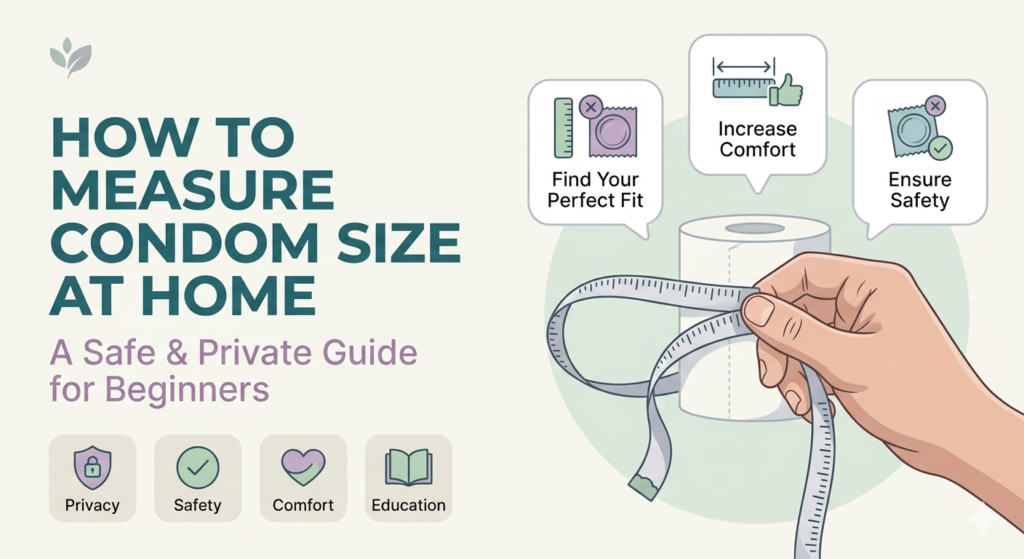
The good news is that measuring at home is simple. You only need:
- a soft measuring tape
or - a piece of string and a ruler
Once you know your girth and length, it becomes much easier to choose a condom that feels more secure and more comfortable.
Quick Answer
If you want to measure condom size at home:
- measure while fully erect
- measure girth first around the thickest part
- measure length second from base to tip
- use girth as the main guide for fit
- use real fit feedback if a condom still feels too tight or too loose
For most people, girth is the more important number.
What You Need to Measure
This article is designed as a measurement-first guide, not another general size-comparison page.
That means the goal here is simple:
👉 help the reader measure correctly at home
👉 help them use those numbers in a practical way
The two measurements that matter are:
- Girth = circumference around the shaft
- Length = measurement from base to tip
Why Girth Matters More Than Length
When people say a condom feels:
- too tight
- too loose
- likely to slip
- uncomfortable around the shaft
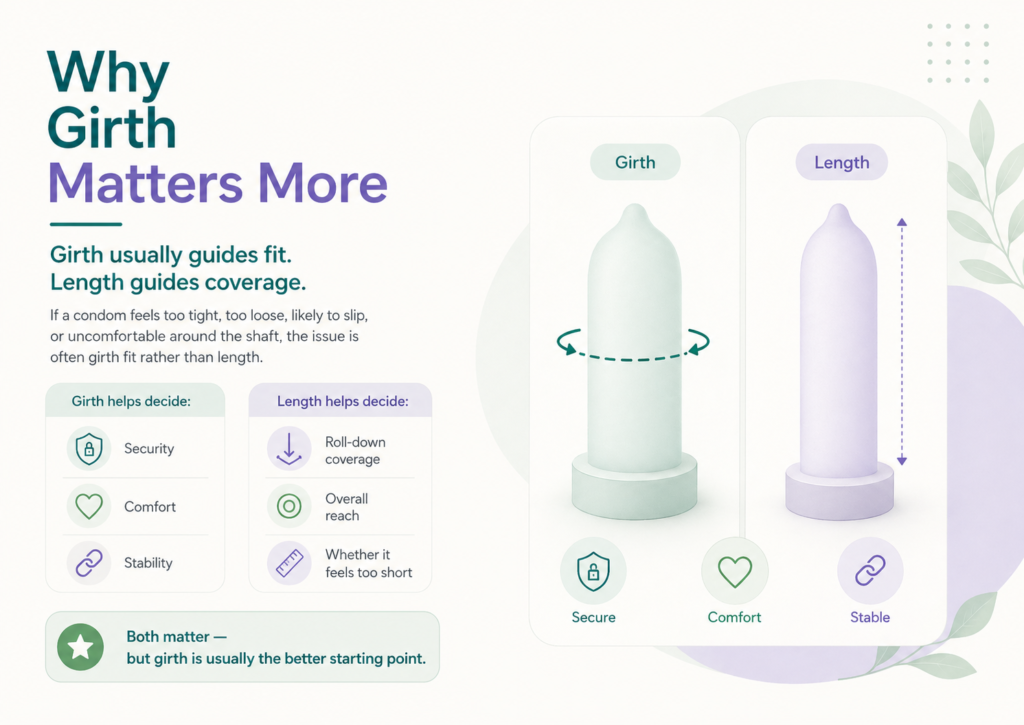
the issue is often girth fit, not length.
That is why girth usually matters more for choosing the right condom size.
A condom that matches girth more closely is more likely to feel:
- secure
- comfortable
- stable during use
If it is too narrow, it may feel overly tight.
If it is too wide, it may bunch, shift, or slip.
A simple way to think about it:
- girth helps decide fit
- length helps decide coverage
- both matter, but girth usually matters more
Why Length Still Matters
Length is still useful. It helps you understand whether a condom is likely to:
- roll down properly
- cover comfortably
- feel too short during use
But many people overfocus on length because it feels easier or more familiar to measure.
In real-world condom fit, width-related problems are often more important than length-related ones.
So yes — measure both.
But for actual fit, start with girth first.
What You Need at Home
You do not need anything special.
The easiest setup is:
- a soft measuring tape
or - a piece of string + ruler
- your phone or notes app to save the numbers
That’s it.
No special tool is required, and the whole process only takes a few minutes.
How to Measure Girth at Home
This is the most important step.
Step 1: Measure while fully erect
Condom sizing should reflect actual use. Measuring when partially erect gives less useful numbers.
Step 2: Wrap the tape around the thickest part
Place the tape around the thickest part of the shaft.
If you are using string:
- wrap it once around
- mark where it overlaps
- lay it flat against a ruler
Step 3: Keep it snug, not tight
The tape should sit against the skin without squeezing or compressing it.
Step 4: Write the number down
Use cm or mm — either is fine. Just be consistent.
Step 5: Measure twice
For better accuracy, measure twice and use the number that repeats most closely.
How to Measure Length at Home
Once girth is done, measure length.
Step 1: Stay fully erect
Again, measure in the same condition that matters for actual use.
Step 2: Measure from base to tip
Place a ruler or tape on the top side of the penis.
Start at the base, where it meets the body, and measure straight to the tip.
Step 3: Write the number down separately
Keep your girth and length measurements separate so you do not confuse them later.
Length is useful, but it should not override girth-based fit if the real issue is tightness or looseness around the shaft.
Common Measuring Mistakes to Avoid
A lot of size confusion comes from simple mistakes.
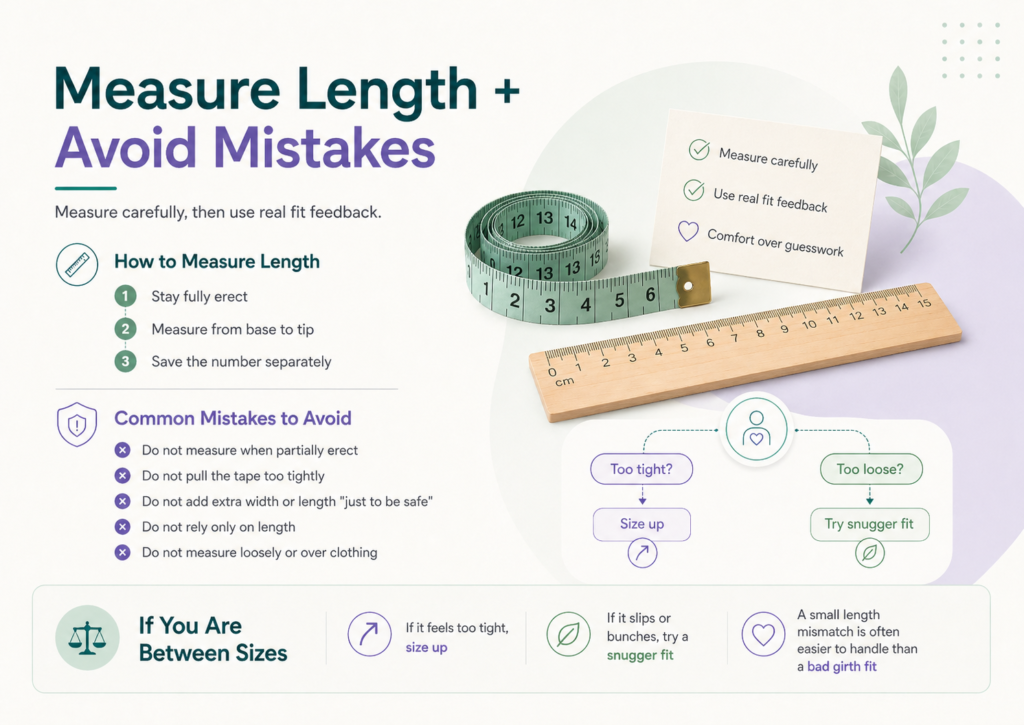
Do not measure when partially erect
That can lead to the wrong fit.
Do not pull the tape too tightly
A compressed girth reading may push you toward a condom that feels too tight.
Do not add extra length or width “just to be safe”
That often leads to a looser, less secure fit.
Do not rely only on length
This is one of the biggest mistakes. Girth is usually more useful for actual condom fit.
Do not measure loosely or over clothing
Keep the process simple and direct.
How to Use Your Measurements
Because your site already has broader content around condom size categories, this article works best as a practical at-home measuring guide.
So instead of repeating another full regular-vs-large-vs-XL article, the goal here is to help readers use their measurements more intelligently.
Simple size logic
- if your girth falls into a typical mid-range, a regular size may work well
- if standard condoms feel too tight, a wider fit may feel better
- if condoms slip, bunch, or feel loose, a snugger fit may be the better answer
The key idea is:
👉 measurement matters more than marketing labels
“Large” on one brand may not match “Large” on another. Actual fit is more useful than the word on the box.
What If You Are Between Sizes?
If your measurements seem to sit between two sizes, choose based on girth first.
Then use real fit feedback:
- if it feels too tight, size up
- if it slips or bunches, try a snugger fit
- if length is slightly more than you need but girth feels right, that is often easier to manage than poor width fit
In other words:
👉 a small mismatch in length is usually easier to handle than a bad girth fit
Signs You Need to Size Up
You may need a wider condom if:
- it feels uncomfortably tight
- it is hard to roll down fully
- it feels like it is pulling too much
- you keep noticing pressure instead of comfort
Signs You Need to Size Down
You may need a snugger condom if:
- it shifts during use
- it slips easily
- it bunches at the base
- it feels loose around the shaft
This is where measuring becomes practical — it is not just numbers, it is a better starting point for real-world fit.
What This Article Helps With
This page is most useful for readers who want to know:
- how to measure condom size at home
- whether girth or length matters more
- what to do if a condom feels too tight or too loose
- how to get a better fit without guessing
That makes this article a strong companion piece to your existing size content, instead of repeating the same comparison topic again.
FAQ
1. How do I measure condom size at home?
Measure while fully erect. First measure girth around the thickest part of the shaft using a soft tape or string, then measure length from base to tip.
2. What matters more for condom size, girth or length?
Usually girth. It is often the more useful measurement for fit, comfort, and security.
3. Can I measure without a measuring tape?
Yes. A piece of string plus a ruler works well.
4. Should I measure when not erect?
No. Measure while fully erect for the most useful fit information.
5. What if a condom feels too tight even after measuring?
You may need a wider option or a different brand fit. Measurement gives a better starting point, but real fit feedback still matters.
6. What if a condom slips off or bunches?
That usually suggests the fit is too loose. Try a snugger option.
7. Do I need to measure often?
Usually no. One careful measurement is enough unless you are still unsure or previously guessed instead of measuring properly.
8. Can I choose a condom size just from labels like regular or XL?
That can be a rough starting point, but measuring at home is much more accurate than relying only on labels.
Final Takeaway
Because your site already has broader condom size content, this article works best as a measurement-first guide.
The real value here is simple:
👉 not another long explanation of size categories
👉 but a clearer answer to what readers actually want to know:
How do I measure correctly at home?
The easiest rule to remember is:
Measure girth first, length second, and then use real fit feedback to refine from there.
That gives you a much better chance of finding a condom that feels secure, comfortable, and reliable.
Medical Disclaimer
This article is for general educational purposes only and does not replace medical advice. If condoms repeatedly feel painful, slip off, or cause irritation even after changing size and technique, speak with a qualified healthcare professional.